Taco Bell Area Coach Job Description, Salary, Responsibilities & Career Path
If you’re exploring leadership opportunities within Taco Bell careers, one of the most important positions to understand is the Area Coach role. This position sits above the Restaurant General Manager level and plays a critical role in driving operational excellence across multiple restaurant locations.
Many professionals researching the Taco Bell Area Coach job description want answers to a few key questions: What does the role involve? How much responsibility comes with it? What qualifications are needed? And perhaps most importantly, is it a worthwhile career move?
The Area Coach position combines leadership, coaching, business management, financial oversight, and operational strategy. It is often considered one of the most influential field leadership positions within Taco Bell and the broader quick-service restaurant industry.
Whether you’re a current restaurant manager seeking promotion or an experienced leader considering a move into multi-unit management, understanding this role can help you make a more informed career decision.
What Is a Taco Bell Area Coach?
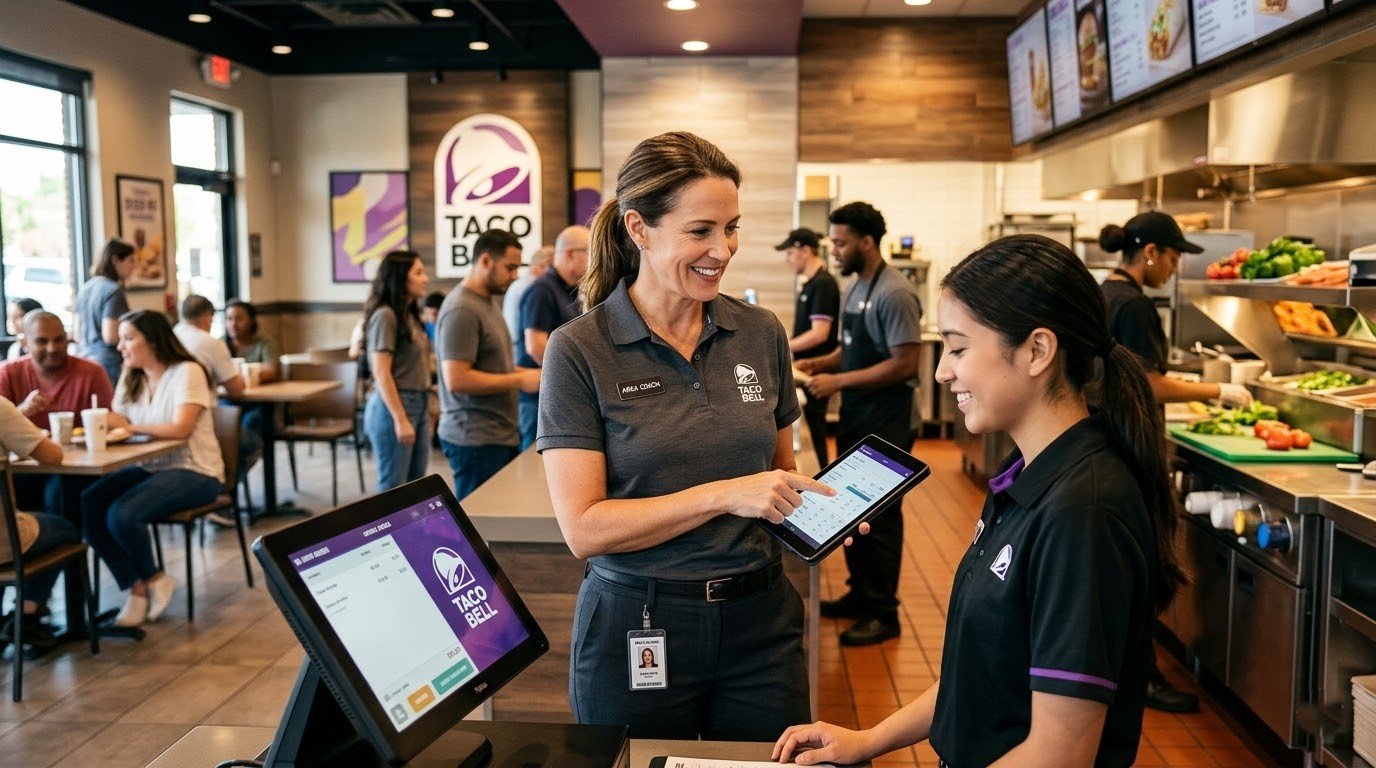
A Taco Bell Area Coach is a multi-unit leader responsible for overseeing several restaurant locations within a designated territory. Their primary responsibility is ensuring each location operates efficiently, meets performance goals, follows company standards, and delivers excellent customer experiences.
Rather than managing a single restaurant, Area Coaches support multiple Restaurant General Managers and their teams. They act as a bridge between corporate strategy and day-to-day restaurant operations.
Within the organizational structure, Area Coaches typically report to Regional Directors or higher-level operations executives while supervising several General Managers.
The role is comparable to a District Manager position commonly found in other restaurant brands.
Why the Area Coach Position Matters
Restaurant success depends on consistency. Customers expect the same quality, service, and experience regardless of which location they visit.
Area Coaches help create that consistency.
They ensure restaurants maintain operational standards, achieve financial goals, develop future leaders, and comply with food safety requirements. Their decisions directly affect customer satisfaction, employee retention, restaurant profitability, and long-term business growth.
Because they oversee multiple locations, their influence extends far beyond a single restaurant.
In many cases, a strong Area Coach can transform an entire market by improving leadership effectiveness and operational performance across several stores.
Where Does the Area Coach Fit in the Career Structure?
The Taco Bell leadership hierarchy generally follows a progression similar to the following:
| Position | Leadership Scope |
|---|---|
| Team Member | Individual contributor |
| Shift Lead | Shift operations |
| Assistant Manager | Department oversight |
| Restaurant General Manager | Single restaurant |
| Area Coach | Multiple restaurants |
| Regional Director | Regional operations |
| Vice President of Operations | Large-scale leadership |
For ambitious restaurant professionals, the Area Coach position often serves as the gateway into executive-level restaurant operations leadership.
Core Responsibilities of a Taco Bell Area Coach
Although responsibilities may vary slightly between franchise operators and corporate-owned restaurants, several core duties remain consistent.
Multi-Unit Operations Management
The most visible responsibility involves overseeing several restaurant locations.
An Area Coach routinely visits stores, evaluates performance, and ensures each restaurant meets company expectations.
Operational responsibilities include:
- Monitoring service quality
- Evaluating restaurant cleanliness
- Reviewing food quality standards
- Ensuring policy compliance
- Supporting General Managers
- Identifying operational improvements
A typical Area Coach may oversee multiple restaurants within a specific territory, requiring regular travel between locations.
Leadership Development and Coaching
One of the most important aspects of the role is coaching managers.
Rather than directly managing hourly employees, Area Coaches focus on developing Restaurant General Managers and leadership teams.
Key leadership responsibilities include:
- Performance coaching
- Leadership training
- Talent development
- Succession planning
- Mentoring future leaders
- Conducting evaluations
Successful Area Coaches understand that developing strong managers creates stronger restaurants.
Financial Performance Management
Every restaurant must remain profitable.
Area Coaches are expected to understand financial performance at a detailed level and help managers improve results.
Financial oversight includes reviewing:
| Financial Metric | Purpose |
|---|---|
| Sales Revenue | Business growth |
| Labor Cost | Staffing efficiency |
| Food Cost | Inventory control |
| Profit Margin | Financial health |
| Guest Count | Traffic trends |
| Average Check | Customer spending |
Strong financial management allows Area Coaches to identify opportunities and address issues before they become major problems.
Customer Satisfaction Oversight
Customer experience remains a key driver of restaurant success.
Area Coaches regularly review customer feedback, complaint trends, online reviews, and service metrics.
Their goal is ensuring every restaurant consistently delivers positive guest experiences.
Common focus areas include:
- Speed of service
- Order accuracy
- Hospitality standards
- Customer complaints
- Guest satisfaction scores
Compliance and Food Safety
Food safety compliance is non-negotiable within the restaurant industry.
Area Coaches must ensure every location follows required food handling procedures and maintains regulatory compliance.
Common responsibilities include:
- Health inspection readiness
- Sanitation monitoring
- Employee certification compliance
- Food safety training
- Regulatory adherence
Failure in these areas can significantly impact restaurant performance and brand reputation.
What Does a Typical Day Look Like?
Many job descriptions explain responsibilities but fail to show how the role works in practice.
A typical day for an Area Coach may include reviewing performance reports early in the morning before visiting restaurant locations.
Throughout the day, they may meet with General Managers, observe operations, analyze staffing levels, discuss financial performance, and provide coaching.
Afternoons often involve strategic planning, talent development discussions, performance reviews, and operational audits.
Unlike General Managers who spend most of their time inside one restaurant, Area Coaches move between locations and focus on broader business performance.
No two days are exactly alike.
Essential Skills Needed to Become an Area Coach
The role requires far more than restaurant experience.
Successful Area Coaches possess a combination of leadership, operational, and business management skills.
Leadership Skills
Leadership remains the most important competency.
Strong Area Coaches can:
- Inspire teams
- Build trust
- Develop managers
- Handle conflict effectively
- Drive accountability
- Create high-performance cultures
Communication Skills
Because the role involves interacting with multiple stakeholders, communication is critical.
Area Coaches communicate with:
- Restaurant teams
- General Managers
- Regional leadership
- Corporate partners
- Vendors
- Community stakeholders
The ability to deliver feedback constructively is especially important.
Financial Management Skills
Understanding restaurant economics is essential.
Successful Area Coaches understand:
- Profit and Loss Statements
- Labor forecasting
- Budget management
- Revenue analysis
- Cost control strategies
Financial literacy often separates average leaders from exceptional ones.
Analytical Thinking
Data drives modern restaurant operations.
Area Coaches must identify trends, solve problems, and make informed decisions based on performance metrics.
This includes recognizing operational issues before they negatively affect results.
Education and Experience Requirements
While educational requirements vary, many employers prefer candidates with backgrounds in:
- Business Administration
- Hospitality Management
- Restaurant Management
- Operations Management
A degree is often helpful but not always mandatory.
Experience tends to carry greater weight.
Most Area Coaches have several years of leadership experience, often progressing through roles such as:
- Shift Leader
- Assistant Manager
- Restaurant General Manager
- District Manager
- Operations Manager
Proven success managing restaurant teams is usually a stronger qualification than formal education alone.
Taco Bell Area Coach Salary and Compensation
Compensation varies significantly depending on location, company ownership structure, experience, and territory size.
Most compensation packages include multiple components beyond base salary.
These often include:
| Compensation Type | Description |
|---|---|
| Base Salary | Fixed annual income |
| Performance Bonus | Results-based incentives |
| Vehicle Allowance | Travel reimbursement |
| Health Benefits | Medical coverage |
| Retirement Benefits | Long-term savings programs |
| Paid Time Off | Vacation and leave benefits |
In the United States, compensation generally reflects market conditions, territory complexity, and performance expectations.
Large metropolitan areas frequently offer higher compensation due to increased operating complexity and cost of living.
Candidates should review specific job postings for the most current salary information.
Area Coach vs Restaurant General Manager
Many candidates wonder whether becoming an Area Coach represents a significant career advancement.
The answer is generally yes.
While both roles are leadership positions, their scope differs considerably.
| Category | Area Coach | General Manager |
|---|---|---|
| Locations Managed | Multiple | One |
| Leadership Scope | Multi-unit | Single-unit |
| Travel Requirement | Frequent | Limited |
| Strategic Focus | High | Moderate |
| Coaching Responsibility | Multiple managers | Restaurant team |
| Financial Accountability | Territory-wide | Individual store |
The transition from General Manager to Area Coach requires moving from direct management to leadership through influence and coaching.
Key Performance Indicators (KPIs)
Area Coaches are typically evaluated using a combination of operational and financial metrics.
Common KPIs include:
- Revenue growth
- Restaurant profitability
- Customer satisfaction scores
- Employee retention
- Labor cost performance
- Food cost control
- Training completion rates
- Operational audit scores
- Compliance performance
A high-performing Area Coach consistently improves results across multiple locations rather than relying on the success of a single restaurant.
Career Path and Advancement Opportunities
One of the most attractive aspects of the role is its long-term growth potential.
The Area Coach position often serves as a stepping stone toward senior leadership positions.
Possible advancement paths include:
- Restaurant General Manager
- Area Coach
- Regional Director
- Senior Director of Operations
- Vice President of Operations
Leadership professionals who excel in multi-unit management often find opportunities throughout the broader restaurant industry as well.
Experience gained in this role is highly transferable.
How to Become a Taco Bell Area Coach
For most candidates, promotion follows a structured progression.
Step 1: Build Restaurant Operations Experience
Develop a strong understanding of restaurant management fundamentals, including staffing, customer service, food safety, and financial performance.
Step 2: Become a High-Performing General Manager
Demonstrate success running a single restaurant.
Employers typically look for leaders who consistently exceed operational and financial goals.
Step 3: Develop Leadership Coaching Skills
The ability to coach managers is critical.
Focus on developing future leaders and creating strong teams.
Step 4: Learn Multi-Unit Operations
Seek opportunities to support neighboring locations, assist with training, or participate in district-level initiatives.
Step 5: Apply for Area Coach Opportunities
When openings become available, highlight measurable achievements and leadership accomplishments.
Common Challenges Area Coaches Face
Although rewarding, the role presents several challenges.
Managing Multiple Priorities
Area Coaches often balance staffing issues, financial performance concerns, customer complaints, and leadership development simultaneously.
Extensive Travel
Frequent travel between locations can affect work-life balance.
Candidates should be comfortable spending significant time on the road.
Accountability for Multiple Locations
Success and failure across several restaurants often fall under the Area Coach’s responsibility.
This level of accountability requires resilience and strong problem-solving skills.
Staffing Pressures
Hiring and retaining talent remains one of the biggest challenges in restaurant operations.
Strong workforce planning skills are essential.
Traits of Highly Successful Area Coaches
While technical knowledge matters, personal qualities often determine long-term success.
Top-performing Area Coaches tend to exhibit:
- Strategic thinking
- Emotional intelligence
- Adaptability
- Accountability
- Strong communication
- Decisive leadership
- Continuous learning
They focus on building people rather than simply managing processes.
Interview Preparation Tips
Candidates interviewing for an Area Coach position should prepare examples demonstrating leadership effectiveness.
Common interview topics include:
- Developing underperforming managers
- Improving restaurant profitability
- Resolving operational challenges
- Managing multiple locations
- Building leadership pipelines
Use measurable achievements whenever possible.
For example, discuss how you reduced turnover, improved sales performance, increased customer satisfaction, or strengthened operational compliance.
Common Mistakes That Prevent Promotion
Many qualified managers fail to secure Area Coach positions because they focus exclusively on restaurant operations.
Employers want leaders who can think strategically and develop others.
Common mistakes include:
- Micromanaging teams
- Ignoring financial metrics
- Failing to develop future leaders
- Poor communication skills
- Weak delegation habits
- Limited multi-unit exposure
Building leadership influence is often more important than technical expertise.
USA, Canada, and UK Career Considerations
The United States remains the largest market for Taco Bell leadership opportunities.
Candidates searching for Taco Bell careers USA often find the highest concentration of Area Coach openings.
In Canada, opportunities may be listed under restaurant management or district leadership positions depending on market structure.
In the United Kingdom, equivalent titles may include Area Manager, Operations Manager, or District Manager within quick-service restaurant organizations.
Despite differences in job titles, the underlying responsibilities remain similar across these markets.
Is the Taco Bell Area Coach Role Right for You?
This position is ideal for individuals who enjoy leadership, problem-solving, coaching, and business management.
It may be a strong fit if you:
- Enjoy developing managers
- Like analyzing business performance
- Want broader leadership responsibility
- Thrive in fast-paced environments
- Prefer strategic work over daily restaurant operations
It may be less suitable if you prefer direct team supervision, dislike travel, or prefer highly predictable work schedules.
If you’re exploring additional leadership opportunities, read our guide Taco Bell General Manager Career Path and read our guide Restaurant Leadership Careers to understand how multi-unit management compares with other advancement routes.
Final Thoughts
The Taco Bell Area Coach role represents one of the most important leadership positions within restaurant operations. It combines multi-unit management, leadership coaching, financial oversight, talent development, customer experience management, and operational excellence into a single career path.
For ambitious restaurant professionals, becoming an Area Coach can provide significant career growth opportunities while building skills that transfer across the entire quick-service restaurant industry. Success requires strong leadership, business acumen, communication skills, and a genuine commitment to developing people.
Those who excel in this position often become future Regional Directors, senior operations leaders, and executives responsible for shaping the performance of entire restaurant markets.
FAQs
What does a Taco Bell Area Coach do?
A Taco Bell Area Coach oversees multiple restaurant locations, develops General Managers, improves profitability, ensures compliance, and drives customer satisfaction across a designated territory.
Is Area Coach higher than General Manager?
Yes. An Area Coach supervises multiple General Managers and has responsibility for several restaurant locations rather than just one.
How many restaurants does a Taco Bell Area Coach oversee?
The exact number varies by territory and market conditions, but Area Coaches typically manage multiple locations within a defined geographic area.
What qualifications are needed for an Area Coach position?
Most employers seek extensive restaurant leadership experience, strong financial management skills, operational expertise, and proven success developing managers.
Is a Taco Bell Area Coach the same as a District Manager?
In many organizations, the Area Coach role functions similarly to a District Manager position, overseeing multiple restaurants and supporting management teams.
What skills are most important for success?
Leadership, coaching, communication, financial management, strategic thinking, and operational expertise are among the most important skills.
Does the job require travel?
Yes. Frequent travel between restaurant locations is typically a major component of the role.
What is the next position after Area Coach?
Many professionals advance to Regional Director, Senior Director of Operations, or other executive leadership roles.
Is prior General Manager experience required?
In most cases, successful candidates have experience as Restaurant General Managers or in similar multi-unit leadership positions.
What industries value Area Coach experience?
Quick-service restaurants, hospitality organizations, franchise operations, retail management, and multi-unit service businesses all value this experience.
What KPIs are Area Coaches responsible for?
Common KPIs include sales growth, profitability, labor costs, customer satisfaction, employee retention, food safety compliance, and operational audit scores.
What is the biggest challenge in the role?
Managing multiple locations simultaneously while maintaining consistent operational performance is often considered the biggest challenge.
Can an Area Coach work for franchise-owned restaurants?
Yes. Both corporate-owned and franchise-owned Taco Bell restaurants employ Area Coaches or equivalent district leadership roles.
How can I improve my chances of promotion?
Focus on leadership development, financial performance, coaching managers, operational excellence, and gaining exposure to multi-unit management.
Is the Area Coach role stressful?
The role can be demanding due to high accountability, travel requirements, staffing challenges, and performance expectations, but many professionals find it highly rewarding because of its leadership impact and career growth potential.