Taco Bell General Manager Job Description: Duties, Salary, Skills & Career Path
A General Manager at Taco Bell is responsible for leading the entire restaurant operation, ensuring profitability, managing staff, and delivering a consistent customer experience. This role sits at the top of the store-level hierarchy in the Quick Service Restaurant (QSR) industry and combines leadership, operations management, and financial accountability.
In simple terms, a Taco Bell General Manager is the person who ensures the restaurant runs efficiently every day balancing people, product quality, speed of service, and cost control.
For job seekers exploring restaurant careers in the United States, Canada, and the United Kingdom, this position is often seen as a long-term management opportunity with strong growth potential in hospitality leadership.
What Does a Taco Bell General Manager Do?
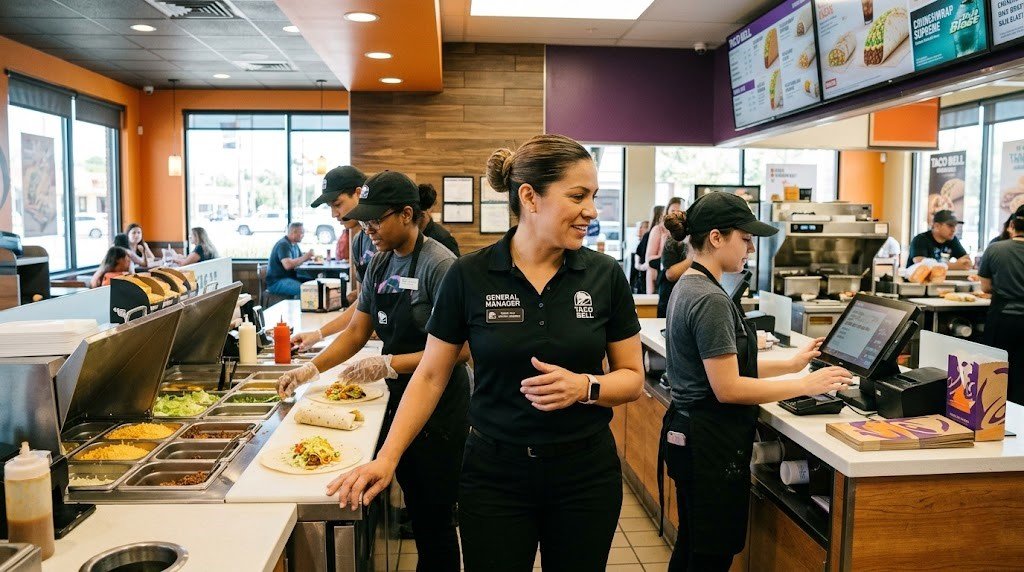
The Taco Bell General Manager oversees all daily operations inside a restaurant location. This includes managing employees, ensuring customer satisfaction, maintaining food safety standards, and achieving financial targets.
At a high level, the role includes:
The GM ensures smooth restaurant operations while balancing labor costs, inventory, and customer service expectations. They act as both a business manager and a team leader.
In practical terms, the GM is responsible for turning corporate goals into daily execution inside the restaurant.
This means every decision from staffing schedules to food quality control flows through the General Manager.
Core Taco Bell General Manager Job Description Explained
The Taco Bell General Manager job description covers five major operational pillars: leadership, operations, finance, compliance, and customer experience.
Leadership and Team Management
The GM is responsible for hiring, training, and developing employees. This includes Shift Leaders, Assistant Managers, and hourly team members. Strong leadership ensures employee retention and consistent service quality.
A GM must create a positive workplace culture while maintaining accountability. This is one of the most critical success factors in QSR management.
Restaurant Operations
Daily operations include managing opening and closing procedures, ensuring food preparation standards, and supervising service speed especially in drive-thru operations, which are central to Taco Bell’s business model.
Operational control also involves ensuring equipment is functional, workflows are efficient, and service delays are minimized.
Financial Performance and Profitability
The GM is responsible for meeting sales targets and controlling costs. Key financial responsibilities include:
- Labor cost optimization
- Food cost control
- Waste reduction
- Sales forecasting
- Profit margin tracking
These financial metrics directly impact the store’s success and bonus eligibility.
Food Safety and Compliance
Food safety compliance is a non-negotiable responsibility. The GM ensures adherence to health regulations, sanitation standards, and internal safety policies.
This includes monitoring:
- Food storage temperatures
- Cleanliness standards
- Employee hygiene
- Equipment sanitation
Customer Experience
Customer satisfaction is central to success. A GM must ensure fast service, accurate orders, and a positive guest experience.
Even small operational failures can impact reviews, repeat customers, and brand reputation.
Daily Responsibilities of a Taco Bell General Manager
A typical day for a Taco Bell GM is structured around operational priorities rather than fixed schedules. The role is dynamic and fast-paced.
In the morning, the GM typically reviews sales reports, staffing levels, and inventory status. They ensure the restaurant is ready for peak service hours and that employees are properly assigned.
During lunch and dinner rush periods, the GM is actively involved in operations. They may step into service roles, resolve customer complaints, and ensure speed of service targets are met.
Afternoons often focus on administrative responsibilities such as hiring interviews, employee coaching, and scheduling.
At the end of the day, the GM reviews performance metrics, ensures closing procedures are completed correctly, and prepares for the next operational cycle.
This continuous cycle of planning, execution, and review is essential in QSR leadership roles.
Skills Required for a Taco Bell General Manager
To succeed as a General Manager, candidates need a combination of technical, operational, and interpersonal skills.
Strong leadership is essential because the GM is responsible for guiding large teams under high-pressure conditions. Communication skills are equally important, as managers must interact with employees, customers, and corporate representatives.
Problem-solving is a daily requirement. Issues such as staffing shortages, equipment breakdowns, or sudden customer service challenges require quick and effective decisions.
Time management and multitasking are also critical due to the fast-paced nature of QSR environments.
Additionally, financial literacy is increasingly important as GMs must understand labor cost management, inventory tracking, and profitability metrics.
Taco Bell General Manager Requirements
Most General Manager positions at Taco Bell require prior experience in restaurant supervision or management.
Typical requirements include:
- Previous restaurant management experience
- Leadership or shift supervision experience
- Basic understanding of budgeting and labor control
- High school diploma or equivalent (degree optional)
- Ability to work flexible hours
In many franchise locations, experience matters more than formal education.
Candidates who have worked as Shift Leaders or Assistant Managers often transition into GM roles after demonstrating operational consistency and leadership capability.
How to Become a Taco Bell General Manager
The path to becoming a Taco Bell GM usually follows a structured career progression within the QSR industry.
Most employees start as team members, then advance to Shift Leader roles. From there, they may become Assistant Managers before being promoted to General Manager.
The timeline varies depending on performance, location, and staffing needs. In high-performing cases, promotion can happen within a few years.
Key factors that accelerate promotion include:
- Strong leadership performance
- Low employee turnover in your team
- High customer satisfaction scores
- Strong operational execution
- Ability to manage labor costs effectively
Franchise-owned locations may promote faster than corporate environments depending on operational demand.
Salary Expectations for Taco Bell General Managers
Salary for a Taco Bell GM varies across the United States, Canada, and the United Kingdom due to differences in labor markets and cost of living.
In the United States, GM salaries typically fall within mid-level restaurant management compensation ranges, with performance bonuses often included.
In Canada, salaries are generally slightly lower in nominal terms but adjusted for regional cost structures.
In the United Kingdom, compensation is aligned with structured hospitality management pay scales.
Additional compensation may include:
- Performance bonuses
- Health benefits
- Paid time off
- Retirement plans (in some corporate roles)
Profit-based bonuses are especially common in high-performing locations.
Franchise vs Corporate Taco Bell Management
A key distinction in the role is whether the restaurant is franchise-owned or corporate-operated.
Franchise locations often have more flexibility in hiring, scheduling, and operational structure. This can lead to faster decision-making but also higher variability in expectations.
Corporate locations typically follow more standardized procedures and reporting structures, with stricter operational guidelines.
Understanding this difference is important for job seekers evaluating opportunities.
Work Environment and Job Challenges
The Taco Bell General Manager role is demanding and fast-paced. It requires long hours, especially during staffing shortages or peak operational periods.
Common challenges include:
- High employee turnover typical in QSR environments
- Managing labor costs while maintaining service quality
- Handling peak-hour customer pressure
- Balancing administrative and operational responsibilities
However, the role also offers strong leadership experience and career mobility within the hospitality industry.
KPI Dashboard and Performance Metrics
A successful GM operates using performance metrics that measure restaurant efficiency.
Key performance indicators include:
- Sales per day
- Labor cost percentage
- Food cost efficiency
- Order accuracy rate
- Customer satisfaction scores
- Employee retention rates
These KPIs determine profitability and performance-based incentives.
Career Path and Growth Opportunities
The Taco Bell General Manager role is often a stepping stone into higher leadership positions.
A typical career path includes:
Shift Leader → Assistant Manager → General Manager → Area Coach → District Manager
Advanced roles involve multi-store oversight and strategic operational responsibility.
Many professionals also transition into other QSR brands such as McDonald’s, Burger King, or Wendy’s.
Is Being a Taco Bell General Manager a Good Career?
The role can be highly rewarding for individuals interested in hospitality leadership and operations management.
It offers:
- Strong leadership experience
- Career progression opportunities
- Transferable management skills
- Performance-based rewards
However, it also requires resilience due to high operational pressure and extended working hours.
Real-World Expectations vs Job Description
Many job seekers underestimate the operational intensity of the role. While job descriptions often focus on leadership and strategy, the reality includes hands-on operational involvement.
A GM may spend the same day handling customer complaints, fixing scheduling gaps, and reviewing financial reports.
Success depends on adaptability and consistency under pressure.
Final Thoughts
A Taco Bell General Manager position is one of the most important leadership roles in the QSR industry. It combines people management, financial accountability, and operational execution into a single role that directly impacts restaurant success.
For job seekers in the United States, Canada, and the United Kingdom, this role offers a strong career pathway into hospitality leadership, especially for those willing to embrace responsibility, fast-paced environments, and performance-driven culture.
Understanding the expectations, challenges, and growth opportunities can help candidates make informed decisions about pursuing this career path.
FAQs
What does a Taco Bell General Manager do?
A Taco Bell General Manager oversees restaurant operations, staff management, customer service, financial performance, and compliance with food safety standards.
How much does a Taco Bell GM make?
Salary varies by location, experience, and franchise ownership, but typically includes base pay plus performance-based bonuses.
Is it hard to become a Taco Bell General Manager?
It requires restaurant experience, leadership skills, and consistent performance, but many employees progress from Shift Leader or Assistant Manager roles.
How many hours does a Taco Bell GM work?
Work hours vary but often include full-time schedules with evenings, weekends, and peak service periods.
Do Taco Bell General Managers get bonuses?
Yes, many locations offer performance-based bonuses tied to sales and operational KPIs.
What qualifications are needed?
Most roles require restaurant experience, leadership ability, and operational knowledge rather than formal degrees.
Is restaurant management a good career?
Yes, it offers strong career growth, transferable skills, and opportunities in the broader hospitality industry.
What is the biggest challenge of being a GM?
Managing staffing, maintaining service quality under pressure, and balancing financial targets with operational demands.