Taco Bell Careers: Complete Hiring, Orientation, Training & First Day Guide
Starting a job at Taco Bell is often one of the most common entry points into the Quick Service Restaurant (QSR) industry. As part of Yum! Brands, Taco Bell offers structured onboarding, fast-paced training, and clear career progression paths for entry-level workers across the USA, Canada, and the UK.
For many applicants searching “Taco Bell Careers”, the real goal isn’t just getting hired it’s understanding what happens after hiring: orientation, training, first shift expectations, pay structure, and how quickly you can succeed or move up.
This guide breaks everything down in a practical, real-world format so you know exactly what to expect before stepping into your first day.
What Taco Bell Careers Really Mean
What is Taco Bell Careers?
Taco Bell Careers refers to the employment system within Taco Bell restaurants where individuals apply for roles such as Crew Member, Shift Lead, and Restaurant Manager, and go through structured onboarding and training.
In simple terms, it includes:
- Job applications
- Interviews
- Hiring process
- Orientation
- Training
- Career progression
Why it matters
Taco Bell is often a first-job employer, meaning many workers have no prior experience. That’s why the system is designed to be beginner-friendly and fast onboarding-focused.
Taco Bell Hiring Process Explained
How to get hired at Taco Bell
The hiring process is typically straightforward and fast compared to other industries.
Step-by-step hiring flow:
- Online application via Taco Bell careers portal
- Review by Restaurant General Manager (RGM)
- Interview (often same week)
- Job offer
- Background check (in some regions)
- Orientation scheduling
What managers look for
- Availability (weekends and evenings matter)
- Attitude and willingness to learn
- Basic communication skills
- Reliability
Experience is NOT required for most entry-level roles.
Taco Bell Job Roles Overview
Understanding roles helps you know where you fit.
Crew Member (Entry-Level)
- Cashier duties
- Food preparation
- Customer service
- Cleaning stations
Shift Lead
- Supervises crew members
- Manages shift operations
- Handles customer escalations
- Ensures food safety compliance
Restaurant General Manager (RGM)
- Oversees entire restaurant
- Hiring and staffing
- Financial performance
- Training oversight
Taco Bell Orientation First Day Explained
What is Taco Bell orientation?
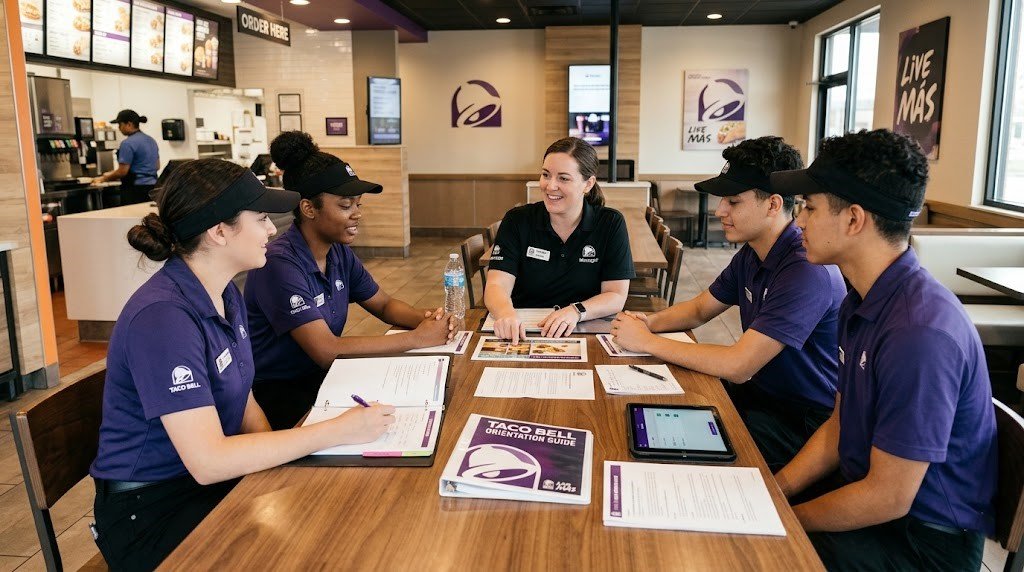
Taco Bell orientation is the onboarding session where new employees complete paperwork, learn policies, and get introduced to restaurant operations before starting active work.
What happens on the first day?
Most orientation sessions include:
- Manager introduction and store tour
- Employment paperwork
- Payroll setup (direct deposit)
- Training videos
- Food safety basics
- Dress code explanation
- Initial job expectations
Simple answer (for quick understanding)
Taco Bell orientation is a paid onboarding session where new hires complete paperwork, learn safety rules, watch training modules, and prepare for hands-on restaurant training.
What You Should Bring to Orientation
Being prepared helps avoid delays.
Required items:
- Government-issued ID
- Social security or work authorization documents (USA)
- Banking details (for direct deposit)
- Hiring paperwork
Optional but helpful:
- Notebook
- Pen
- Water bottle
- Comfortable closed-toe shoes
Taco Bell Orientation Dress Code
What to wear
Most locations recommend:
- Clean shirt (polo or plain tee)
- Dark pants or khakis
- Closed-toe shoes
What to avoid
- Sandals or open shoes
- Ripped clothing
- Offensive graphics
- Overly casual outfits
Appearance matters because Taco Bell operates under strict food service hygiene standards.
Taco Bell Training Process Explained
How training works after orientation
Training is structured into stages:
1. Shadow Training
You observe experienced employees.
2. Guided Practice
You perform tasks with supervision.
3. Independent Work
You handle stations alone once ready.
Key training areas
Food Preparation
- Ingredient assembly
- Portion control
- Menu consistency
Customer Service
- Greeting guests
- Order accuracy
- Complaint handling
POS System Training
- Order entry
- Payment processing
- Drive-thru systems
Food Safety Compliance
- Temperature control
- Hygiene rules
- Cross-contamination prevention
How Long is Taco Bell Training?
Training duration varies, but typically:
- 2 to 4 weeks for full onboarding
- First week = observation + basic tasks
- Second week = supervised work
- Third week = independent shifts
Speed depends on location, staffing needs, and your performance.
Is Taco Bell Orientation Paid?
Yes, in most cases orientation and training time are paid.
Because:
- It is mandatory work training
- It is required for compliance
- It contributes to job performance
However, payroll timing may vary depending on franchise systems.
Taco Bell Pay Structure (USA, Canada, UK)
USA
- Entry-level crew: hourly wage (varies by state)
- Shift leads: higher hourly rate
- Managers: salary-based
Canada
- Slightly higher base wages in urban areas
- Strong hourly consistency
UK
- Structured hourly system
- Student-friendly scheduling
Pay comparison table
| Region | Crew Member Pay | Shift Lead Pay | Manager Pay |
|---|---|---|---|
| USA | Low–mid hourly | Moderate hourly increase | Salary |
| Canada | Mid hourly | Higher hourly | Salary |
| UK | Mid hourly | Moderate increase | Salary |
What Happens on Your First Work Shift?
After orientation, your first shift usually includes:
- Meeting your trainer
- Shadowing a station
- Learning one role at a time
- Practicing customer interaction
- Getting feedback from shift lead
Common first-day tasks:
- Taking simple orders
- Cleaning stations
- Food assembly assistance
- Learning register basics
Taco Bell Crew Member Job Reality
What the job is like
The crew member role is fast-paced and repetitive but structured.
Pros
- Easy entry-level hiring
- Flexible schedules
- Team-based environment
- Fast training
Cons
- Busy peak hours
- Standing for long periods
- High-speed service pressure
What No One Tells You About Taco Bell Jobs
Many competitors avoid discussing real experiences. Here’s the reality:
- Speed matters more than perfection
- Mistakes are part of training
- Managers expect learning curves
- First week feels overwhelming but improves quickly
- Team coordination is essential for success
Taco Bell vs Other Fast Food Jobs
Taco Bell vs McDonald’s
- Similar training structure
- Taco Bell emphasizes assembly customization
- McDonald’s focuses more on standardized processes
Taco Bell vs Burger King
- Taco Bell has more modular food preparation
- Burger King emphasizes grill operations
Taco Bell vs KFC
- KFC is heavier on frying operations
- Taco Bell is faster assembly-based workflow
Who Can Work at Taco Bell?
Basic requirements:
- Minimum hiring age (varies by country/state)
- Legal work authorization
- Availability during peak hours
- Basic communication ability
No formal education or experience is required.
How Fast Can You Get Hired?
Many applicants get hired within:
- 2 to 7 days in high-demand locations
- 1 to 2 weeks on average
Fast food hiring is one of the quickest employment cycles.
Taco Bell Career Growth Path
Career progression is structured:
- Crew Member
- Certified Trainer
- Shift Lead
- Assistant Manager
- Restaurant General Manager
- Multi-unit Manager
Growth depends on performance and availability.
Common Mistakes New Hires Make
- Arriving late to orientation
- Not asking questions
- Ignoring food safety rules
- Trying to rush before learning basics
- Poor communication during shifts
First Week Survival Guide
To succeed early:
- Focus on one task at a time
- Learn menu basics daily
- Observe experienced employees
- Stay calm during rush hours
- Ask for feedback regularly
Emotional Reality of First Job
Starting at Taco Bell can feel intense initially:
- Fast pace creates pressure
- New systems feel overwhelming
- Confidence builds after repetition
- Most employees adapt within 1–2 weeks
This is normal across all QSR jobs.
Why Taco Bell Training Matters
Training exists to:
- Reduce food safety risks
- Improve speed and consistency
- Lower employee turnover
- Standardize customer experience
Good onboarding directly improves job success.
Final Thoughts
Taco Bell careers offer one of the most accessible entry points into the workforce, especially for first-time job seekers. The hiring process is fast, orientation is structured, and training is hands-on.
If you understand expectations early especially around speed, teamwork, and consistency you can adapt quickly and build long-term opportunities within the organization.
Taco Bell careers are designed for entry-level accessibility, fast onboarding, and structured growth. The process from hiring to first shift is intentionally simple, but success depends on learning speed, attitude, and consistency.
From application to orientation and training, every stage is built to prepare employees for real-world restaurant operations in a fast-paced environment.
Success in Taco Bell careers is less about experience and more about willingness to learn, show up consistently, and improve daily.
FAQs
What is Taco Bell orientation like?
It includes paperwork, training videos, store tour, payroll setup, and introduction to job responsibilities.
Is Taco Bell orientation paid?
Yes, most locations pay for orientation and training hours.
How long does Taco Bell training take?
Typically 2–4 weeks depending on performance and location.
Do you need experience to work at Taco Bell?
No, most entry-level roles require no prior experience.
What should I wear to Taco Bell orientation?
Clean casual clothing with closed-toe shoes unless instructed otherwise.
Is Taco Bell a hard job?
It can be fast-paced but becomes manageable with training.
How fast can you get hired at Taco Bell?
Many applicants are hired within a few days to two weeks.
What is a Taco Bell crew member job like?
It involves food preparation, customer service, and maintaining fast service speed.
Can you move up at Taco Bell?
Yes, employees can progress from crew member to management roles over time.
Is Taco Bell good for a first job?
Yes, it is commonly considered one of the most accessible first-job employers.